

Freelance marketing is something that a lot of hard-working freelancers seem to struggle with.
A lot of us see the word “marketing” and our eyes glaze over right away.
That’s a shame, because those of us who are successful online usually don’t engage in the “slick-haired salesman,” Gordon Gecko-esque tactics that most people hate.
Today, freelancers and entrepreneurs can use what I call “magnetic marketing” — attracting clients based on the free value they offer.
Free value?
It’s not what you’re thinking! Free value generally stems from the usefulness of your content and the authority of your personal brand.
(While you can grow your business by improving your negotiation techniques, your opportunities are limited without plenty of new leads coming in.)
Magnetic freelance marketing is all about avoiding the “feast and famine” cycles that plague many freelancers and entrepreneurs.
This empowers me to spend more time submitting marketing and social media proposals and closing deals. Which creates more opportunities to focus on what I love.
Today, we’re going to show you how to create:
- A hub for your freelance business using content
- Awareness that will have clients chasing YOU down
- And a bit of (*gasp!*) SEO – even if you hate SEO
Let’s dig in.

Image credit: FirmBee
What Is Freelance Marketing?
Just a quick note before we begin.
You might be confused about what “freelance marketing” actually means. That’s because there are actually two different contexts in which this term is used:
- Efforts to increase your visibility and attract freelance clients – regardless of the industry
- A specific type of freelancer who specializes in helping clients increase their visibility
This post focuses almost entirely on the first group, although it does include a few resources if you’re a freelancer specializing in marketing.
Without further ado, here’s how you can use marketing to attract more clients:
1. Content Marketing
 Content marketing (or Blogging) is the new “picks and shovels” of the internet gold rush.
Back in the day, when gold was on everybody’s mind out West, the saying goes that the people who made the real money were the ones selling picks, shovels, and blue jeans to the miners.
You’ve likely been bombarded by the “blogging about blogging” sleazebags all over the business and marketing parts of the web (if you haven’t been, count yourself lucky).
That’s a real shame, because blogging is a fantastic way to create a magnetic business, but most people are too busy trying to sell “picks and shovels” to tell you what actually works.
The best part about being a freelancer is that you don’t need your blog to blow up like OKCupid’s blog (a company that later sold for $50 million) to have an impact on your business.
As a content strategist for tech startups, it bugs me that blogging gets a bad rap with the freelance community. So today I’m going to cut through the malarkey and break down three big mistakes that most people make when trying to blog to get more clients.
I’m not here to preach to you. I’m just going to give simple action advice and I can bet that either you (or a freelancer you know), is making these mistakes with their blog right now!
Mistake 1. Writing Content for the Wrong Crowd
This is a cardinal blogging SIN if you’re looking to build up your freelance clientele, but 90 percent of freelancers I encounter are doing this.
They are so focused on “building an audience” that they never take the time to figure out who they want in the seats.
Instead of blogging about topics that potential clients care about, they spend too much time creating posts on things that other freelancers care about!
Why should a web designer blog about design/dev topics that no client would ever care to ask them about? Do you think your client cares about color gradients, line-height and where you’ll be using PHP instead of static HTML?
Surprise: They don’t, and 99 percent of clients looking to hire you for a website have other goals in mind (more business, a stronger presence online, specific functionality, etc.)
Although our buddy Rafal Tomal is now working full time for a software company, he shows you how it’s done by creating articles like this:
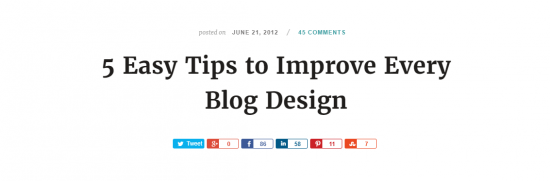
Tell me: Why is that a good example?
It’s because his primary customer base (content marketers) deeply care about their blog design and conversions… so he writes about those topics!
Similarly, some of the most popular articles here on the Bidsketch blog, like my posts on common pricing mistakes or how to be more productive when working from home were well-received because they were written for freelancers and entrepreneurs, the type of people who actually use Bidsketch.
Don’t create content for your peers, create content that attracts people who will want to pay you to do what you do!
Mistake 2. Writing Too Much Content
“Say whaa?”
This goes against a lot of “blogging advice” that you’ve heard, but that’s okay. A huge majority of the blogging tips crowd has no idea what they’re talking about.
Think of it this way: If you only have 50 blog subscribers, what’s a new post going to do for you?
A hundred hits… if you’re lucky?
What’s the point in spending two hours on a blog post for those results? There is no point in doing that, it’s dumb.
What should you do instead?
I’ll take a page from by buddy Derek Halpern here and suggest you apply the 80/20 principle (the “Pareto principle”) to your blog: 20 percent on content creation and 80 percent on promotion.
What does that mean exactly?
I’ll tell you what it doesn’t mean — tweeting out the same post eight times in a single day.
Promoting your content means getting it in the hands of the right people, aka, other sites willing to either feature it or link to it (seriously, that’s all you should worry about).
Let me share a candid example: I wrote a long post on productivity and collaborated with a YouTube channel to make a video on the same topic.
When I emailed my newsletter (which is pretty large), a couple thousand people came to my site… woohoo!
But I didn’t stop there. I also created a list of sites and people who I thought might truly enjoy this monster post I had spent so much time on.
Thousands of people had already seen my post…
But the internet is a massive place. Tens of thousands more people might enjoy it too, so why bother making even more content?
I emailed journalists, bloggers, and even a few scientists (it was called the “Science of Productivity” after all), and made my request with this script:
Hey there, I really enjoy your work, that last [project/article/something they worked on] was really fascinating!
I wanted to shoot you a quick email, as I collaborated with an animation team known as ASAPscience to create a video on the “Science of Productivity,” I only mention it because I think it’s something your [audience/readers/followers] will really love.
It digs into the big myths about productivity, and dives into about a dozen academic studies on what people should do instead.
Would you like me to send it over to you?
I kept the email short and personal, one of the big rules in an outreach email.
I didn’t ask for anything in the first email! I broke the ice by mentioning a former project/article/whatever thing that they worked on, ensuring they knew I was familiar with their work and wasn’t just blasting out emails.
The results were pretty awesome to say the least!
I was featured on the Discovery Channel blog, one of my favorite sites Brain Pickings, and even the GOOD homepage.
That helped the video pick up over 500,000+ views and sent me tens of thousands of additional visitors.
I did the same thing with this article by pitching it to Lifehacker, where it got picked up and generated over 360,000 views and counting:

Why are you spending so much time creating content when you could just be promoting your best stuff?
Mistake 3. Not Building a Newsletter
Who cares about social media profiles? Not this guy, that’s for sure!
Let me show you some numbers from my 2 most recent newsletter broadcasts…

…and in case you want a big version:

What that means: Nearly 60 percent of my subscribers opened my broadcast email, and over 30 percent of them clicked on the link within.
When’s the last time you saw results like that from sending out a tweet?
Probably never. You’ve never seen results like that from a tweet because Twitter click-throughs sit at abysmal rates of between one and five percent (if you’re lucky).
So why do so many freelance bloggers (and bloggers in general) insist on clogging up their pages with follow buttons when they could focus on a simple newsletter sign-up?
Have you noticed there are no follow buttons on the Bidsketch blog? That’s done for a reason. Because even more people use email than social networks, it’s a better delivery method than crowded social media profiles.
(Imagine sending a business update on Facebook during the summer time. Do you think people are going to click your link, or keep browsing beach and bikini photos? I think you know the answer…)
You don’t have to make this mistake.
Start building your email list with Drip, or any of the other options out there (TinyLetter, MailChimp, ConvertKit, etc.) There are tons available.

Image credit: Free-Photos
2. Appearances and Authority
“What’s he on about now?”
Stay with me here…
I’m really into music production, and it always amazes me how indie producers can charge so little in comparison with “mainstream” producers (like the Neptunes).
It’s literally a comparison of 3-4 figures per track vs. up to a high 6-figures for the big guys!
The difference isn’t in quality, it’s in authority. The big names are known to deliver, so they command a higher asking price.
To build this same authority for yourself (and to attract more clients directly), you need to pursue “features” about your business.
These can come in the form of interviews, case studies, guest articles, and any other way you can personally land on popular sites.
Take a look at these examples:
Last year one single blog post on Copyblogger generated more business for me than [my other efforts] combined… I found myself on the phone or in email exchanges with CEOs and founders for companies like Hubspot, KISSmetrics, Treehouse and Stripes39. In fact, I routinely turned down work as a freelancer because the demand was so high.
— Demian Farnworth, expert copywriter
 Last year one single blog post on Copyblogger generated more business for me than [my other efforts] combined… I found myself on the phone or in email exchanges with CEOs and founders for companies like Hubspot, KISSmetrics, Treehouse and Stripes39. In fact, I routinely turned down work as a freelancer because the demand was so high.
* * *
I made over a thousand bucks through Srini’s blogcast FM
— Mars Dorian, illustrator and branding expert
 interview. Not because he paid me, but because the interview proved so successful that it resulted in ebook sales, design and consulting gigs.
I can also tell your from personal experience that this interview and then this one brought in nearly a dozen people looking to hire me.
How can you land features like this?
There are three great ways that I highly recommend:
Method 1. Sell a Story
How would you like to land a feature on an newsletter with thousands of subscribers?
That’s what Jason Blumer did when he got his story featured on Brennan Dunn’s Freelancers Weekly, a newsletter for freelancers about business and lifestyle advice.
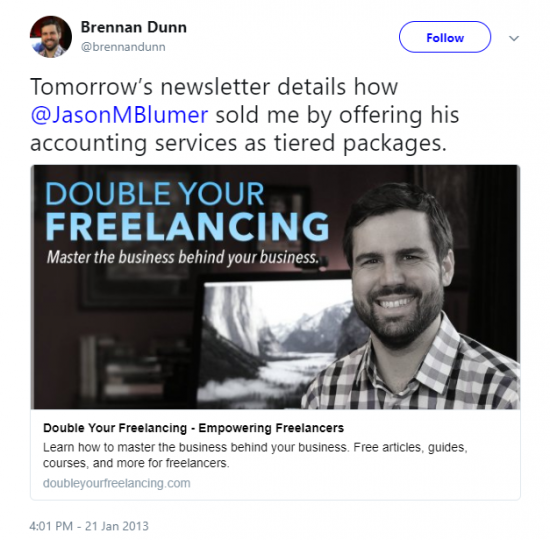
The idea of selling your story has nothing to do with the sleazy side of selling (or “selling out.”)
It’s about being memorable by going to a site with an audience and pitching an interesting story for their readers. You offer them good content, and they give you a feature.
The best way to do this is to approach someone who you actively follow, and then tell them how their advice helped you in some way.
Check out how this caricature artist Julie landed a spot on Rami Sethi’s site by telling her story about how Ramit’s freelance material helped her raise her rates by a huge amount:
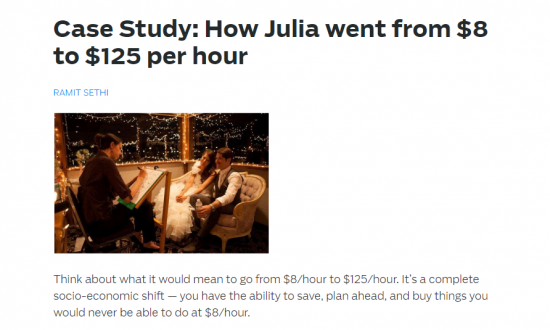
Landing features like this can be great because you get all the attention, unlike a guest post, where many people actually assume the owner of the blog wrote the post (I’ve had that happen so many times!)
If you have any interesting bits of experience from your freelancing efforts or anything else you might be able to pitch to journalists (use HARO to do this easily), be sure to put forth the effort to tell your tale.
Or, you can approach a company or blogger whose services/advice you used (I often sing the praises of WPEngine) and pitch them your success story. They are usually happy to feature you as someone who’s made an impact using what they sell or teach.
You’ll never know where it will take you!
Method 2. Create Content for Others
I don’t want to call this “guest posting,” because it doesn’t necessarily involve writing.
Creating content for other popular sites and letting them run it can be an awesome way to get exposure for yourself if you do it the right way.
Look at the results I had on Copyblogger:
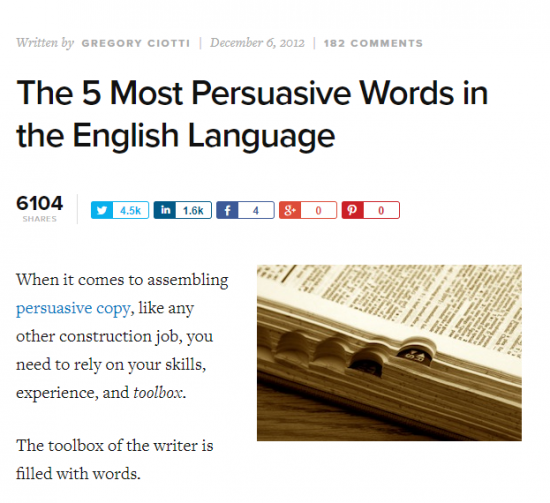
Landing a guest appearance is definitely worth it when your work gets tweeted about thousands of times!
How can you do this without wasting your time?
First things first, think about who you’re writing for, and create something that will be a smash hit for their audience.
It’s okay to include a bit of yourself in this type of content, but if you want maximum returns for your time, look at some of your target site’s most popular posts and see what it is about them that makes them popular.
(I noticed that copywriting + vocabulary topics did really well on Copyblogger, and I decided to add a unique research twist.)
Next, make sure you’re linking to a “money” page on your site in your byline. Most sites allow you a byline when you write for them, where you can link to a few places where you are active online.
Do. Not. Link. To. Twitter!
Instead, link to either your portfolio, a landing page that asks people to join your newsletter, or some other page that’s designed to convince people to buy your services.
You should also have one direct link to your homepage, but can ignore social media profiles (why do all that work and then send traffic to Twitter instead of your own site?).
I especially love the newsletter landing page. Remember: It doesn’t have to look corny with yellow highlighter and other nonsense characteristic of other bad landing pages.
Take a look at Bidsketch’s SEO proposal template page as an example.
When you can add over 100 newsletter subscribers from a single guest post (and you can if you link to good pages) in addition to scoring more clients, you’re doing guest posting right!
Method 3. Content Syndication
This is one of the easiest ways of all, and definitely has the highest ROI for your time when done well.
Many big sites nowadays engage in syndication, or publishing other people’s content on their site. They get a good article for free, and you get exposure for something you’ve already written. It really is a win-win.
I once wrote an article that got syndicated on Business Insider, where it racked up an additional 11,000+ views and sent me about 70 newsletter subscribers.
What did I do? Nothing!
Well, almost nothing…
I just sent the BI contributions editor an email saying they could republish my work if they thought it might fit the “War Room” content style (the “War Room” is a section on Business Insider’s site).
Now they regularly syndicate my content, all after a single email!
I’ve had places like The Huffington post pick up my articles as well, and all of these were done after exchanges where I made efforts to promote my content rather than just create more of it (sound familiar?).
Where can you get your articles syndicated?

Image credit: Photo-Mix
3. SEO
Nearly every freelancer I’ve met (besides those that actually do search engine optimization) absolutely hates talking about SEO.
Search engine marketing can seem like a huge waste of time. Some marketers hype it up so much that it starts to seem like snake oil.
But it isn’t.
Optimizing your content for search is worth it, but you’ve got other things to do too! Bills to pay. Client work to handle. How can you leverage SEO without spending a crap-load of time learning stuff you don’t need to know?
Easy…
Follow this stupidly simple rule: one page, one keyword.
For every content-centric page on your site (a blog post, a resource page, etc.), have ONE search engine term in mind that you want to rank for in the long run.
Here’s an example. I wrote a post for my startup on 20 Customer Loyalty Strategies that Work.
The thing was, there was no way I was going to rank for a term like “customer loyalty” with a single post, it was too tough of a search term.
(You can check keywords for free by using the Google Keyword Planner)
So what did I do?
I wrote a post for people, not for the search engines (which is what you should do too). Afterwards, instead of just leaving the title as is, I changed the SEO title tag to “20 Customer Retention Strategies that Work.”
That’s because the term “customer retention strategies” could easily be ranked for, and guess what:
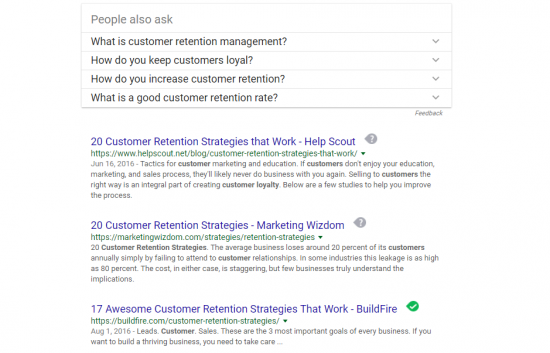
I ranked #1 for that term in just a few days… with no extra work! (Nearly 1,200 people search for this term each month, so it’s definitely a bonus.)
Congrats, you’re now an SEO expert!
Ok, not quite… but that’s seriously all freelancers who can’t stand SEO need to know about it. Make sure that each piece of content is going after a single solid search term and write for people first, not Google bots.
This way, you’re not leaving money on the table by making yourself impossible to find on Google.
Your Turn
That was a pretty long post, so today I’d just love to hear your thoughts on some of the techniques discussed here!
Are you creating a “magnetic” marketing plan for your freelance business? Leave a comment below and let me know.